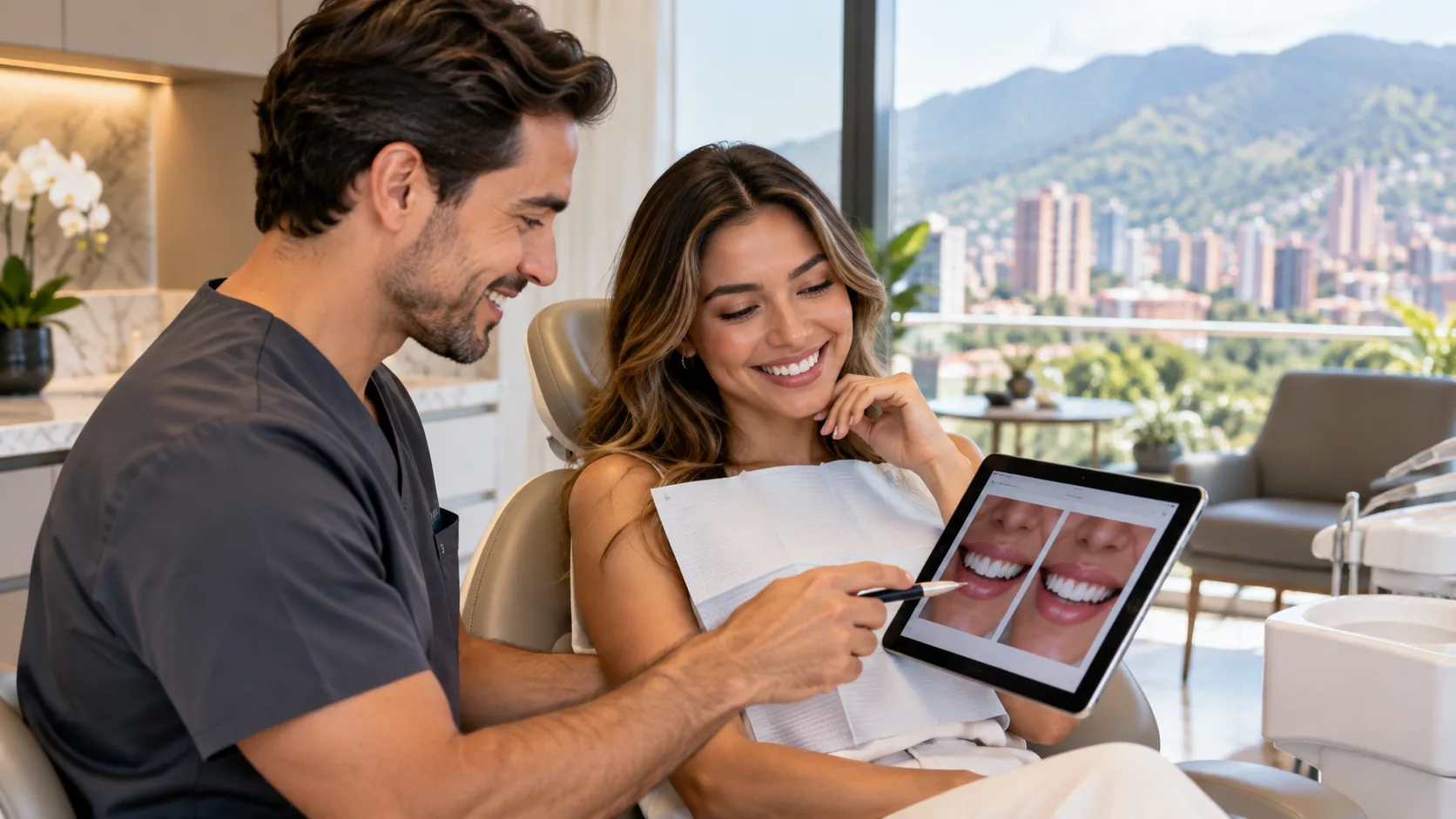
The last appointment in Medellín feels like the finish line. Your veneers are bonded, the bite has been checked and you are already planning the reveal at home. In reality it is the start of a long relationship with your new smile, most of which will happen thousands of kilometres from the clinic that made it.
That distance is the part many dental travellers underplan. This guide focuses on the weeks, months and years after you fly home: how to get used to the veneers, what daily habits protect them, how to hand your case over to a local dentist, and what to do if something chips or comes loose.
Why aftercare planning is different for travellers
A patient treated near home can drop in when a veneer feels odd. A traveller has to decide whether a problem is worth a call, a local visit or a flight. Planning ahead turns those decisions from stressful guesses into simple next steps.
Before you leave Medellín: the handover pack
Aftercare starts at the clinic. The CDC's guidance for medical travellers recommends getting copies of your records in English and sharing them with any provider who treats you afterwards (CDC Yellow Book, 2026). For veneers, a useful pack looks like this:
- A list of every restored tooth, using standard tooth numbers, with the restoration type
- The material and brand of the veneers and the cement or bonding system used
- The shade selected, and any shade used for bonding on neighbouring teeth
- Before and after photos, plus any final X-rays
- Your night guard, if one was made, with care instructions
- Clinic contact details, including who answers questions after you leave
- The clinic's written policy on repairs, remakes and what is covered abroad
Ask for these documents at your second-to-last visit, not the last. That gives the clinic time to prepare them and you time to check they are complete.
The first two weeks
Getting used to the feel
New veneers can feel bulky or slightly odd at first, especially along the inside edges. The ADA notes it may take a few days to get used to a veneer (ADA MouthHealthy, 2026). Your tongue will explore the new surfaces constantly for a while, and speech sounds like "s" and "f" may feel different briefly.
What is not normal, and worth reporting quickly, is a bite that feels high on one side, pain when you bite down, a sharp edge cutting your tongue or lip, or a veneer that moves. These are much easier to address while you are still in Medellín, which is one reason to leave a buffer day before your flight.
Sensitivity
Some temporary sensitivity to cold is common after bonding. If it persists or worsens over weeks, contact the clinic and see a local dentist; lingering sensitivity can have several causes that need an exam.
Flying home
Veneers themselves do not usually raise any special flight concerns, but if your trip also involved gum surgery or other procedures, follow the clinic's instructions about when you can fly. Pack your night guard in carry-on luggage so it is never lost with a checked bag.
Daily habits that protect veneers
The ADA's care advice for veneers boils down to a short list: avoid biting nails and chewing on hard objects or foods, wear a mouthguard during contact sports, limit stain-causing drinks such as coffee, tea and red wine, and brush twice a day with fluoride toothpaste and clean between your teeth daily (ADA MouthHealthy, 2026).
The reason daily cleaning matters so much is that a veneer does not protect the tooth underneath from decay. The ADA notes cavities can still form under or around a veneer. In other words, the natural tooth is still there, and it still needs care.
Things people forget
- Ice and hard candy. Crunching ice is a classic way to chip porcelain.
- Using teeth as tools. Tearing tape, opening bottles or snapping tags off clothes.
- Biting directly into very hard foods with front teeth. Cut apples and crusty bread into pieces where possible.
- Abrasive whitening pastes. Ask your dentist which toothpaste suits your restorations.
- Whitening the teeth next door. Bleaching changes natural teeth but not veneers, so it can create a mismatch.
Handing your case to a local dentist
The single best aftercare step is to book a visit with a dentist at home soon after you return. Bring your records pack. The goal is to establish a baseline: your local dentist sees the restorations when they are new and knows exactly what was done.
Some patients worry a local dentist will be reluctant to see work done abroad. In practice, most dentists simply want clear information. A tidy set of records, photos and material details makes their job easier. If you are in the UK, the General Dental Council advises speaking to your own dentist before going abroad and telling them your plans so they can help if complications arise (GDC, 2026). That advice works well for travellers from anywhere.
What to ask at your first home visit
- Do the margins and bite look good to you?
- Is there anything you would like me to watch for between visits?
- Which cleaning tools and toothpaste do you recommend for these restorations?
- How often should I come in for checkups and cleanings?
- Can your hygienist polish around veneers safely?
If something goes wrong
Even well-made veneers can have problems. The ADA notes a veneer may chip, crack, wear down or loosen over time and may need re-bonding, repair or replacement (ADA MouthHealthy, 2026). Knowing your next steps in advance takes the panic out of it.
| What happens | Immediate step | Who to contact |
|---|---|---|
| Small chip, no pain | Keep the area clean; avoid biting on it | Local dentist for assessment; notify the Medellín clinic |
| Veneer comes off whole | Keep the veneer safe in a clean container; do not glue it yourself | Local dentist promptly; send photos to the clinic |
| Crack or fracture | Avoid chewing on that side | Local dentist; ask the clinic about its remake policy |
| Pain, swelling or sensitivity that worsens | Do not wait it out | Local dentist or urgent dental care |
| Dark line at the gumline | Note when you first saw it | Mention at your next checkup |
The CDC also advises medical travellers to seek care promptly if they suspect a complication, whether still abroad or after returning home (CDC Yellow Book, 2026).
Understand the clinic's policy before you need it
Ask before treatment what the clinic offers if a veneer fails after you go home. Does it cover the cost of a replacement only if you return? Will it reimburse a local repair? Who pays for flights? The GDC suggests asking exactly these questions, including who covers extra travel and remedial work (GDC, 2026). Get the answers in writing.
Travel and sport after veneers
Life does not stop after veneers, and nor should it. A few situations deserve extra thought.
Contact and ball sports
The ADA recommends a mouthguard for sports or activities that could injure the mouth. If you play football, basketball, hockey or martial arts, ask your home dentist about a guard made to fit over your new restorations.
Future trips
Pack your night guard, a soft toothbrush and floss or interdental brushes in hand luggage. Save a photo of your records summary on your phone so any dentist you see abroad can understand your restorations quickly.
Professional cleanings
Tell every hygienist you see that you have veneers. Some polishing pastes and instruments are better suited than others to porcelain and to the bonded edges, and a hygienist who knows what is there can adapt.
New dental work nearby
If a neighbouring tooth later needs a filling or crown, ask the dentist to match the colour to your veneers rather than the other way round. Your records pack, especially the shade, makes that easier.
The long game
Veneers are not permanent in the sense of lasting forever. They will eventually need maintenance or replacement, and many people end up planning a future trip for that. Keeping good records now makes that future visit, whether in Medellín or elsewhere, faster and better informed. Our guide to replacing old veneers or crowns covers what that process involves.
In the meantime, the routine is simple: clean carefully, protect against grinding and hard bites, see your local dentist regularly and keep the Medellín clinic in the loop if something changes.
A one-page checklist for your fridge
- Brush twice a day with fluoride toothpaste; clean between teeth daily
- Wear the night guard if one was prescribed
- Rinse with water after coffee, tea or red wine
- No ice crunching, nail-biting or teeth-as-tools
- Checkup with your local dentist soon after the trip, then as they advise
- Report chips, looseness or bite changes promptly
- Keep records and clinic contacts in your phone and email
Frequently asked questions
Will my local dentist treat veneers placed in Colombia?
Most dentists will assess and maintain restorations placed elsewhere, especially if you bring clear records. Policies vary between practices, so ask when booking and bring your records pack to the first visit.
Can I use whitening strips after getting veneers?
Whitening does not change the colour of veneers, crowns or fillings. Using it on surrounding natural teeth can create a colour mismatch, so ask your dentist before whitening.
What should I do if a veneer falls off on a weekend?
Keep the veneer safe, avoid chewing on that side, and contact a local dentist or urgent dental service as soon as you can. Do not use household glue. Let the Medellín clinic know and send photos.
Do veneers need special toothpaste?
The ADA recommends fluoride toothpaste and products with its Seal of Acceptance. Ask your dentist whether any particular product suits your restorations, since very abrasive pastes may not be ideal.
How often should I see a dentist after getting veneers?
Follow your local dentist's recommendation. A first visit soon after returning home creates a baseline, and regular checkups after that help catch small problems before they become bigger ones.